Section 4.5
Common Vascular Plant in Shallow Open-Water Wetlands
Summary of commonly detected vascular plant species and their Wetland Indicator Status across 1,373 shallow open water wetlands in Alberta’s Natural Regions.

- Vascular plant communities reflect the water and soil conditions that shape wetlands across Alberta.
- In this section, we summarize the most commonly encountered vascular plant species across 1,373 shallow open-water wetlands (SOWs), highlight the five most frequent species in each Natural Region, and report each species’ Wetland Indicator Status.
- Regional patterns in species occurrence provide context for comparing vegetation communities across gradients in wetland hydrology, water permanence, and surrounding landscape disturbance.
Introduction
Hydrophytic vascular plants, meaning plants adapted to grow in saturated soils or standing water, are a defining feature of wetlands and provide a reliable, site-specific way to understand wetland type and condition across Alberta.
- In wetlands, the prolonged presence of water creates soil and chemical conditions that only certain plant species can tolerate, shaping plant communities that are distinct from those found in upland habitats.
- Different plant species and plant communities are associated with different wetland classes and types, which have specific hydrological and soil conditions. As a result, plant composition at a wetland site can be used to infer wetland classification, nutrient status, patterns of disturbance, and overall ecosystem condition.
- Wetland plants have specialized adaptations that allow them to survive in saturated soils without decay. These include features that transport oxygen to roots (e.g., aerenchyma and adventitious roots), mechanisms that oxygenate the surrounding soil, and tolerances to chemically challenging environments, including the hyper-saline soils found in parts of southern Alberta.
- Vascular plants are effective wetland indicators because they are rooted in place and subject to local conditions throughout the year. Plants vary in how strongly they are associated with wetland environments, and this variation is captured by their Wetland Indicator Status, which summarizes how consistently a species occurs in wetlands compared to uplands.
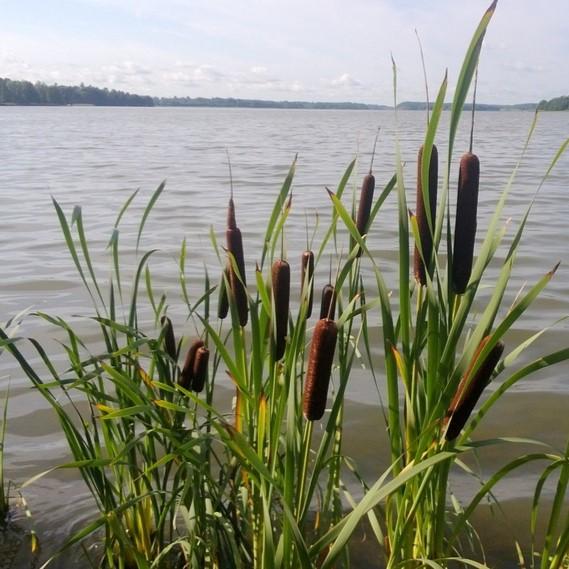
Aerenchyma is an air-filled tissue that moves oxygen to waterlogged roots.
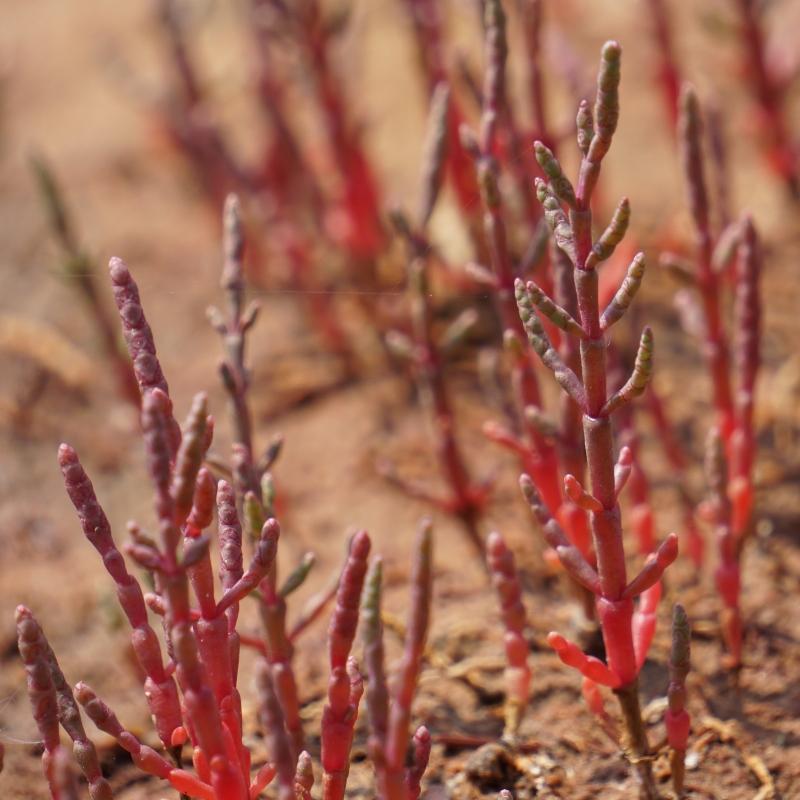
Some plants, like the Red Saphire, have a high salt tolerance and grow in Alberta’s alkali wetlands
This section introduces the role of vascular plants as wetland indicators and summarizes plant species commonly associated with shallow open-water wetlands across Alberta’s Natural Regions.
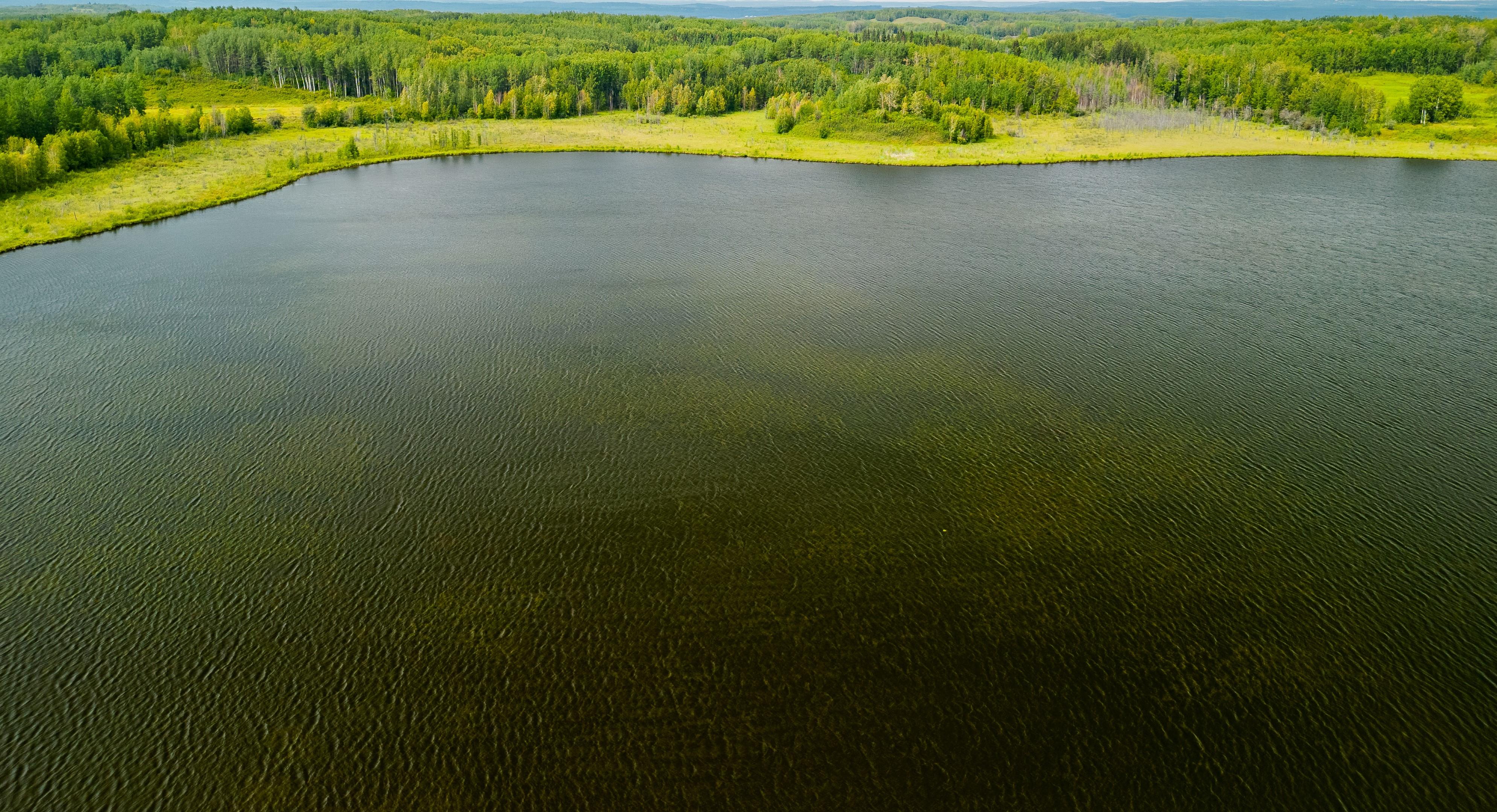
Wetland Indicator Status
Wetland Indicator Status is a classification framework that describes how strongly a plant species is associated with wetland conditions, based on how frequently it occurs in wetland versus upland environments. This classification reflects a gradient of wetness tolerance and degree of water permanence.
Species are assigned to one of five standard indicator categories:
- Obligate Wetland: almost always occurs in wetlands.
- Facultative Wetland: usually occurs in wetlands but can occasionally be found in uplands.
- Facultative: occurs in both wetlands and uplands with roughly equal frequency.
- Facultative Upland: usually occurs in uplands but may occur in wetlands under certain conditions.
- Upland: almost always occurs in uplands.
The Alberta Wetland Plant list (Alberta Native Plant Council, 2021) provides Wetland Indicator Status for native and non-native species in Alberta. This vegetation information complements soil and hydrology evidence used to delineate wetlands under the Alberta Wetland Identification and Delineation Directive.
Obligate Wetland
 Varina Crisfield
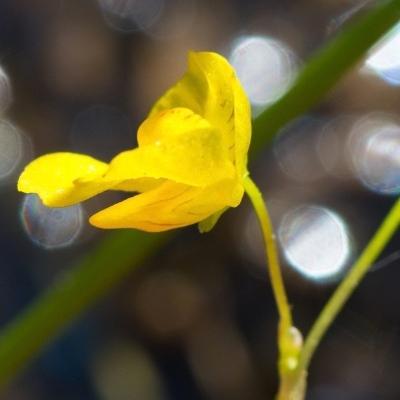
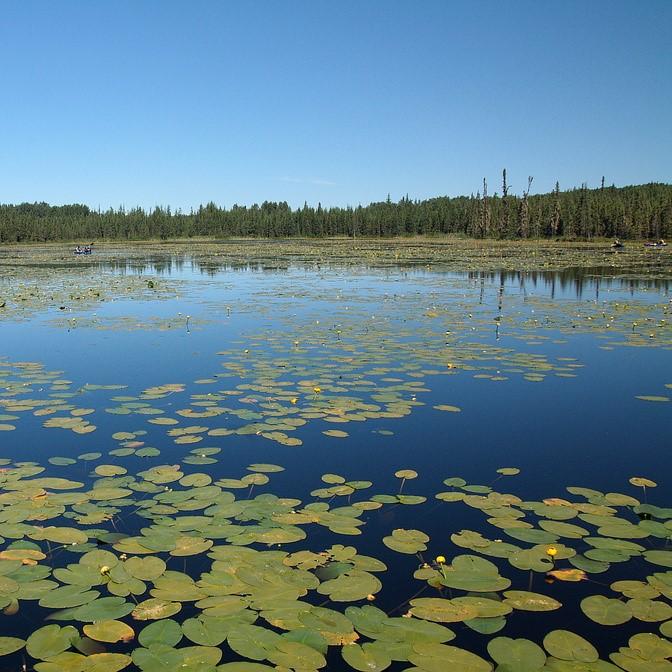
Yellow Pond-lily (Nuphar variegata) is an obligate wetland species with leaves that float on the surface of the water.
Obligate and Facultative Wetland
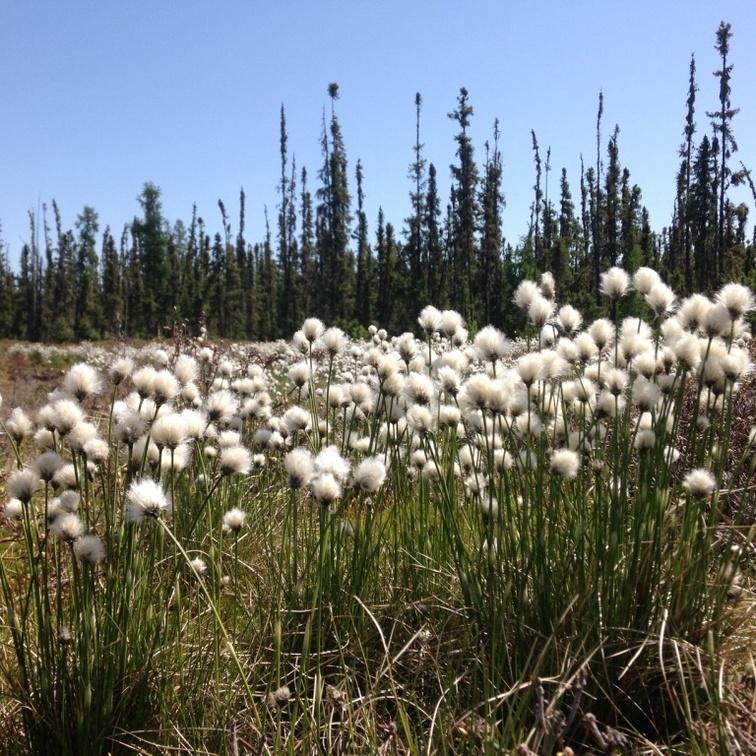 Amanda Zee
Sheathed Cotton Grass (Eriophorum vaginatum) is an obligate wetland species established near Black Spruce (Picea mariana), a facultative wetland species.
Facultative Wetland to Facultative
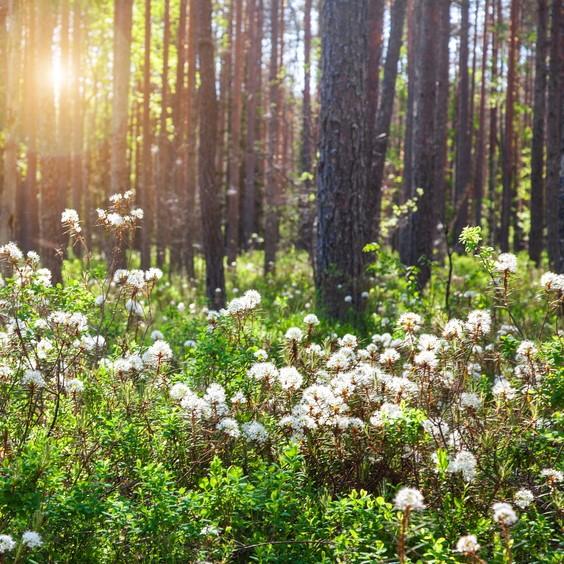 Alexsandr Ozerov
Labrador tea (Rhododendon groenlandicum) is common in wet areas, and is classified as a facultative wetland to a facultative species.
Non-native Species and Wetland Indicator Status
- Non-native species are assigned a wetland indicator status and are most often classified as facultative, meaning they can tolerate a wide range of wet and dry conditions. Species with broad tolerances are often the most successful when introduced to new environments.
- In wetlands, non-native species are commonly associated with human disturbance or changes in wetland conditions, such as water-level drawdown, soil disturbance, or altered hydrology.
- Some non-native species are designated as Noxious or Prohibited Noxious Weeds under Alberta’s Weed Control Act, which carries legal requirements for control or eradication.
Facultative to Facultative Upland
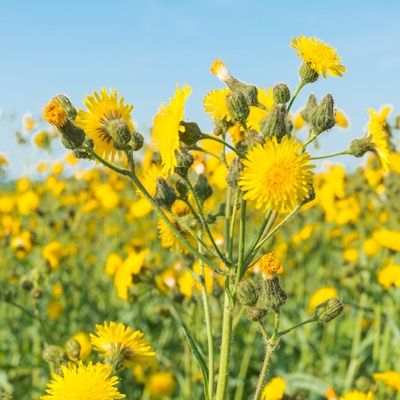
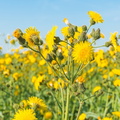
Perennial Sow Thistle (Sonchus arvensis) is a widespread noxious weed that can establish near wetlands; it is common around SOW wetlands in the Grassland and Parkland Natural Regions
Facultative to Facultative Upland
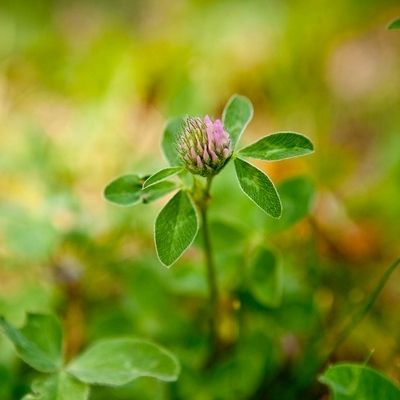
Alsike Clover (Trifolium hybridum) is an introduced forage species seeded in pasture and hay mixes, tolerant of moist soils and common along disturbed wet meadow margins.
Facultative
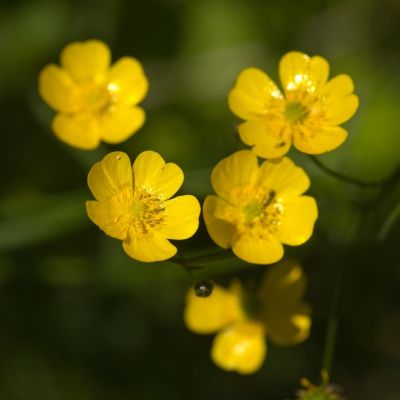
Tall Buttercup (Ranunculus acris) is a noxious weed found in moist open areas or disturbed habitats, most commonly detected the Foothills Natural Region.
Methods
The ABMI sampled shallow open-water wetlands (SOWs) and adjacent wetland margins as part of its core monitoring program to assess biodiversity and track long-term environmental change.
- Vascular plant surveys have been conducted at 1,373 SOWs across Alberta, targeting wetlands ≥1 ha in size and ≤2 m deep at their deepest point.
- In this summary, species observations were combined across sampling years to produce complete site-level species lists. Using these site-level lists, we assessed patterns of species occurrence across Alberta’s Natural Regions.
- For species occurring at >20% of sampled sites within a Natural Region, we summarized occurrence, wetland indicator status, nativity status, weed control act status, and conservation status rank.
- These summaries provide insight into broad-scale patterns in vascular plant composition and wetland condition across Natural Regions.
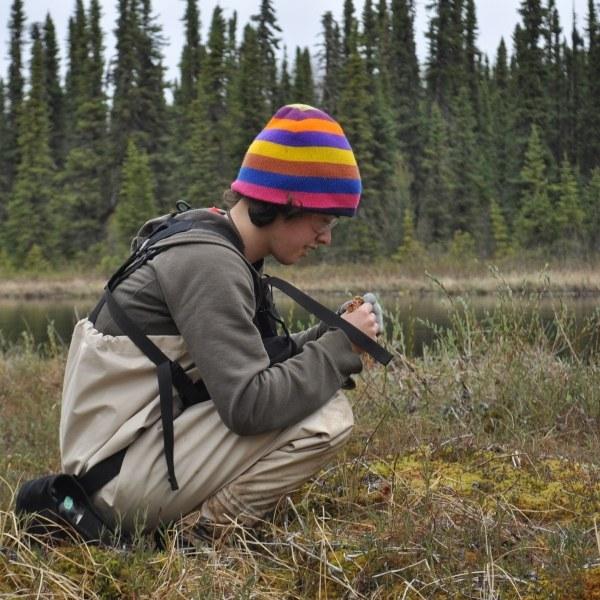
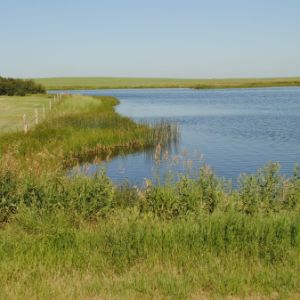
Field work around open-water wetlands.
Sampled shallow open water wetlands. Map shows the distribution of sampled shallow open water wetlands (SOWs) by ABMI across Alberta’s Natural Regions.
Results
Summary of the most commonly observed vascular plant species across 1,373 shallow open water wetlands in each Natural Region.
Click on a tab to explore vascular plants commonly found in each of Alberta’s Natural Regions.
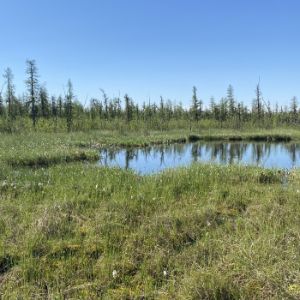
Shallow open-water (SOW) wetlands in the Boreal Forest Natural Region typically exhibit relatively stable water levels compared to those in southern Alberta, and occur across a range of landscape settings, including peatlands and mineral soils.
The region is dominated by fens, and several fen-associated species (e.g., Marsh Cinquefoil and Small Bedstraw) occur at a high proportion of sampled wetlands. This pattern reflects both the prevalence of fen wetlands in the Boreal Forest Natural Region and sampling protocols that include open water and adjacent wetland margins, where fen vegetation is commonly present.
To learn more about wetlands in the boreal region, see Section 2.2.
Per cent occurrence of the five most abundant vascular plant species detected in SOW wetlands of the Boreal Forest Natural Region
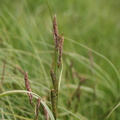
Common wetland species found in fens, marshes, and saturated margins of SOW wetlands.
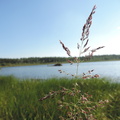
A generalist species, occurring in open spaces, forests, and wetland edges.
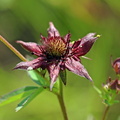
Most commonly found in fens; occasionally marshes and swamps.
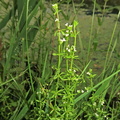
Found in wetlands with a preference for fens and swamps.
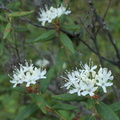
This generalist species is found in a range of habitat types, with the exception of very dry or nutrient rich places.
Highlights
- A total of 745 shallow open-water wetlands were sampled in the Boreal Forest Natural Region.
- 57 vascular plant species occurred at 20% or more of sampled sites.
- 84% of these species were classified as Obligate Wetland or Facultative Wetland species.
- 9% were classified as Facultative Upland or Upland species.
- One non-native species, Wood Bluegrass (Poa nemoralis), occurred at ≥20% of sites.
Summary
- The dominance of wetland-associated native plant species indicates that sampled SOWs in the Boreal Forest Natural Region commonly experience persistent surface water or long-duration soil saturation.
- The very limited occurrence of upland and non-native species is consistent with relatively low levels of human footprint in the catchments surrounding sampled wetlands, as described in Section 3.1.
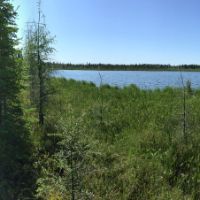
The Canadian Shield Natural Region is Alberta’s smallest region and is located in the far northeast of the province. The landscape is shaped by exposed bedrock and past glaciation. Wetlands are common in shallow depressions and flat areas where water collects, and most are peat-based wetlands such as bogs and poor fens.
Shallow open-water wetlands were sampled using ABMI’s standard 20-km grid, which resulted in 25 sampled sites in the Canadian Shield Natural Region. Because relatively few wetlands were sampled, these results are presented as reference information and are not intended to represent all wetlands in the region.
Per cent occurrence of the five most abundant vascular plant species detected in SOW wetlands of the Canadian Shield Natural Region
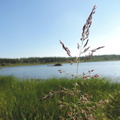
A generalist species, occurring in open spaces, forests, and wetland edges.
Common wetland species found in fens, marshes, and saturated margins of SOW wetlands.
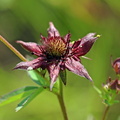
Most commonly found in fens; occasionally marshes and swamps.
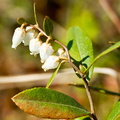
Found in low nutrient wetlands such as bogs and poor fens.
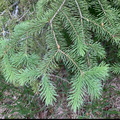
A wetland tree species that dominates in wet, low nutrient places, and is iconic of bogs and poor fens.
Highlights
- A total of 25 shallow open-water wetlands were sampled in the Canadian Shield Natural Region.
- 76 vascular plant species occurred at 20% or more of sampled sites.
- 84% of these species were classified as Obligate Wetland or Facultative Wetland species.
- 5% were classified as Facultative Upland or Upland species.
- No non-native species occurred at ≥20% of sites.
Summary
- Many of the species occurring at ≥20% of sampled shallow open-water wetlands are fen- and bog-associated, aligning with the dominance of bogs and poor fens, saturated organic soils, and the frequent inclusion of peatland vegetation within and adjacent to sampled wetlands.
- The dominance of obligate wetland species and the absence of frequently occurring non-native species are consistent with stable hydrological conditions and low levels of human footprint in the catchments surrounding sampled wetlands, as described in Section 3.1).
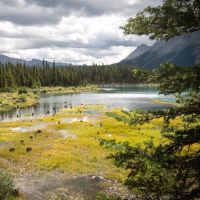 Peter Kolejak
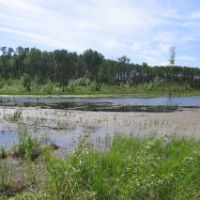
Shallow open-water wetlands in the Foothills Natural Region occur most often in lower-relief areas and valley bottoms. They are less common at higher elevations and steeper terrain, and occur both within peatland complexes, including fens and bogs, and on mineral substrates.
To learn more about wetlands in the foothills region, see Section 2.4.
Per cent occurrence of the five most abundant vascular plant species detected in SOW wetlands of the Foothills Natural Region
Most commonly found in fens; occasionally marshes and swamps.
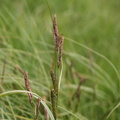
Common wetland species found in fens, marshes, and saturated margins of SOW wetlands.
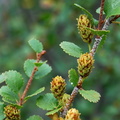
Most commonly found in fens but can also be found in swamps.
This generalist species is found at a range of habitat types, with the exception of very dry or nutrient rich places.
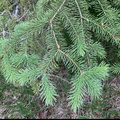
A wetland tree species that dominates in wet, low nutrient places, and is iconic of bogs and poor fens.
Highlights
- A total of 136 shallow open-water wetlands were sampled in the Foothills Natural Region.
- 53 vascular plant species occurred at 20% or more of sampled sites.
- 79% of these species were classified as Obligate Wetland or Facultative Wetland species.
- 13% were classified as Facultative Upland or Upland species.
- No non-native species occurred at ≥20% of sites.
Summary
- The dominance of native wetland-associated species and absence of commonly occurring non-native plants suggest stable hydrological conditions and low disturbance in catchments surrounding the sampled SOWs in the Foothills Natural Region (for disturbance in catchments see Section 3.1).
- All five of the most frequently observed species are native to Alberta and are generally associated with nutrient-poor conditions.
 Rob Hinchliffe
Wetlands in the Parkland Natural Region occur within a matrix of open grasslands and forested patches. They are generally more wooded than wetlands in the south but more dynamic than those in the north. With extensive impacts from agriculture, urban-rural development, and other industries, only a small portion of native parkland remains in Alberta.
Per cent occurrence of the five most abundant vascular plant species detected in SOW wetlands of the Parkland Natural Region
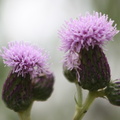
A widespread, noxious weed that prefers open and dry disturbed sites.
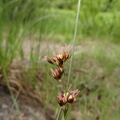
A noxious weed that establishes after a disturbance and spreads to moist and open areas.
A common species, especially in the grasslands, preferring moist conditions.
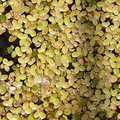
A floating plant that is widespread in SOW wetlands and marshes.
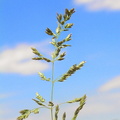
A widespread, non-native species that establishes in wetland margins and upland habitats.
Highlights
- A total of 152 shallow open-water wetlands were sampled in the Parkland Natural Region.
- 50 vascular plant species occurred at 20% or more of sampled sites.
- 66% of these species were classified as Obligate Wetland or Facultative Wetland species.
- 28% were classified as Facultative Upland or Upland species.
- 10 non-native species occurred at ≥20% of sites.
Summary
- The frequent occurrence of non-native and upland-associated species is consistent with long-standing land conversion and landscape fragmentation in the catchments surrounding sampled wetlands. At the same time, the presence of obligate wetland species indicates that standing water or saturated soils remain common at many sites, consistent with the classification and ABMI’s selection criteria for SOWs.
- Noxious weeds Creeping Thistle (Cirsium arvense) and Perennial Sow-thistle (Sonchus arvensis) were the most frequently encountered species, occurring at 78% and 65% of sites, respectively. Kentucky Bluegrass (Poa pratensis), a non-native pasture species, was the fifth most common.
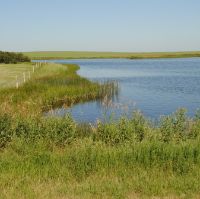
Grassland SOWs occur within a multi-use landscape that includes native grasslands, agricultural lands, and areas of urban–rural development. These wetlands often have changing water levels through the year and between years, but they are only very rarely completely dry. Many sampled sites were constructed waterbodies, such as dugouts.
To learn more about wetlands in the grassland region, see Section 2.3.
Per cent occurrence of the five most abundant vascular plant species detected in SOW wetlands of the Grassland Natural Region
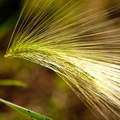
Prefers open and sunny areas, with a tolerance for salty soils found in prairie wetlands.
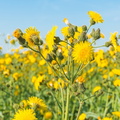
A noxious weed that establishes after a disturbance and spreads to moist and open areas.
A common species, especially in the grasslands, preferring moist conditions.
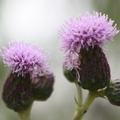
A widespread, noxious weed that prefers open and dry disturbed sites.
A widespread, non-native species that establishes in wetland margins and upland habitats.
Highlights
- A total of 259 shallow open-water wetlands were sampled in the Grassland Natural Region.
- 53 vascular plant species occurred at 20% or more of sampled sites.
- 55% of these species were classified as Obligate Wetland or Facultative Wetland species.
- 36% were classified as Facultative Upland or Upland species.
- 15 non-native species occurred at ≥20% of sites.
Summary
- The high proportion of upland-associated and non-native species suggests that many sampled wetlands experience drawdown, exposed shorelines, or other forms of disturbance. This pattern is consistent with higher levels of human footprint in the catchments surrounding sampled wetlands in the Grassland Natural Region (see Section 3.1).
- Non-native species are often common where land use or environmental stressors, such as heavy grazing, cultivation, or drought, create conditions that favour colonization.
- Three of the five most frequently observed species are non-native. Perennial Sow Thistle (Sonchus arvensis) and Creeping Thistle (Cirsium arvense, formerly Canada Thistle) are noxious weeds under Alberta’s Weed Control Act, while Kentucky bluegrass (Poa pratensis) was historically introduced as a pasture species for livestock.These upland-associated species are captured in dry wetland margins with our sampling protocols.
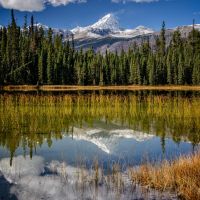 JD Hascup
Shallow open-water wetlands are relatively uncommon in the Rocky Mountain Natural Region due to steep terrain and geological conditions that favour deeper lakes and flowing waters. Where present, wetlands are often small and transition rapidly from open water to upland vegetation, resulting in narrow wetland margins.
To learn more about wetlands in the mountain region, see Section 2.4.
Per cent occurrence of the five most abundant vascular plant species detected in SOW wetlands of the Rocky Mountain Natural Region
Common wetland species found in fens, marshes, and saturated margins of SOW wetlands.
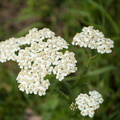
A widespread species and found in a range of habitats, from moist to very dry conditions.
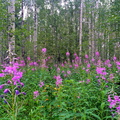
Prefers open and moist conditions in recently disturbed forests.
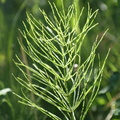
A generalist species that can establish in various types of habitat.
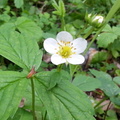
Found in wooded uplands and grows well in disturbances or forest openings.
Highlights
- A total of 56 shallow open-water wetlands were sampled in the Rocky Mountain Natural Region.
- 27 vascular plant species occurred at 20% or more of sampled sites.
- 44% of these species were classified as Obligate Wetland or Facultative Wetland species.
- 37% were classified as Facultative Upland or Upland species.
- One non-native species, Red-seeded Dandelion (Taraxacum erythrospermum), occurred at ≥20% of sites.
Summary
- Three of the five most frequently encountered species were more strongly associated with upland habitats. This pattern is consistent with narrow wetland margins and rapid transitions from open water to upland vegetation, rather than broad changes in wetland hydrology or disturbance in surrounding catchments, which is relatively low in this region (see Section 3.1).
- The five most frequently observed species occurred at 39–45% of sampled sites, which is slightly lower than in other Natural Regions. These occurrences likely reflect the rapid transition from open water to upland in these wetlands, and the inclusion of narrow wetland margins in sampling protocols. The small number of sampled wetlands limits the interpretation of broader patterns for shallow open-water wetlands in this high elevation region.
Limitations
We have provided simple summaries of the proportion of sites where species were encountered, and provided indicator status, nativity status, and subnational conservation status rank for each species found at >20% of sites. Although we find this general overview to be interesting and broadly representative of SOW conditions in our province, there are limitations to our dataset.
- First, the study design applied at these wetlands changed over time and relied in part on a person’s ability to define wetland zones and place plots in them appropriately. Although we do our best, personal judgement and protocol changes tend to decrease the reliability of vegetation datasets. In some years, technicians were asked to split plots between different vegetation types within a wetland; this can be challenging even for experienced wetland practitioners.
- Next, as noted in the text, the ABMI sampled on a grid, rather than via a stratified design. Therefore, Natural Regions received different amounts of survey effort. Sample sizes in the Rocky Mountain and Canadian Shield are likely too low to be clearly representative of the vegetation communities present in those regions.
- Finally, we chose to present results for species that occurred at > 20% of sites. This cutoff was arbitrary, but our goal was to provide information about the most commonly encountered species. As a side effect of this goal, uncommon species found within Natural Regions are not shown, even though these records might be of interest to some people.
.jpg)
References
Alberta Conservation Information Management System. 2022. Online data accessed (July 2, 2025). Alberta Forestry and Parks, Edmonton, Alberta. Available at: https://www.alberta.ca/alberta-conservation-information-management-system.
Alberta Wetland Plant List. 2021. Online data accessed (July 2, 2025). Alberta Native Plant Council. Available at: https://anpc.ab.ca/?page_id=10097.
Weed Control Act. 2016. Online data accessed (July 2, 2025). Government of Alberta, Edmonton, Alberta. Available at: https://open.alberta.ca/publications/w05p1.
Contributors

Dr. Jacqueline Dennett, Wetland Ecologist, Alberta Biodiversity Monitoring Institute (ABMI)
Jacqueline has been affiliated with the ABMI since 2009. She is a vegetation ecologist with particular interest in human disturbance, wetlands, and study and survey design.
If you have questions about the ABMI's wetland monitoring program, please get in touch: jacqueline.dennett@ualberta.ca
We are grateful for the support of the ABMI's delivery partners.



We would like to acknowledge the organizations and sponsors highlighted below who financially supported the development of this report.